

Agent Review · Season 2026 Act 2
Drop the Beat, Drop the Enemies
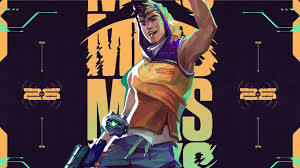
Riot Games crashed the VALORANT Masters Santiago Grand Finals on March 15th with an announcement nobody saw coming: a Croatian DJ-turned-Radiant who uses sound itself as a weapon. Meet Miks — and he might just be the most genuinely team-first agent the game has ever seen.
If you've been playing VALORANT long enough, you know the Controller role has a personality type: sit back, smoke off the angles, play the numbers, and let your fraggers do the work. Miks tears up that job description entirely. He's the first Controller in the game's history capable of healing teammates, making him only the third agent ever — alongside Sage and Skye — to bring any form of sustain to a fight. That alone would be enough to turn heads. But Riot went further, building him around the philosophy that your best plays happen with your team, not beside them.
His reveal cinematic dropped alongside a BUNT remix of Zedd's "Clarity," and honestly? That was the most on-brand agent reveal Riot has ever done. This guy doesn't just use sound — he is sound.
Kit Breakdown: Every Ability Explained
C — M-Pulse
A throwable device with two modes toggled by alt-fire: Concuss or Heal. Once deployed, it sends out sound waves to either disorient enemies or restore HP to allies. The most flexible ability in the kit.
Q — Harmonize
Target an ally, FIRE to grant both of you a Combat Stim that refreshes on each kill. Alt-fire grants the stim to Miks alone. Designed for coordinated site executes where the momentum snowballs.
E — Waveform (Signature)
Equip a map targeter, mark locations, then alt-fire to deploy smokes. A classic Controller smoke with a unique placement interface that offers more tactical flexibility than traditional smoke mechanics.
X — Bassquake (Ultimate)
Build up and unleash a forward cone of Sonic Radiance that knocks back, deafens, and slows caught players. Crowd control, displacement, and area denial all in one devastating pulse.
"Miks' gameplay is teamplay-first. From dropping smokes, to healing, and providing combat stim — players will often be focusing on their allies when making decisions. He's able to change the tempo as a round progresses based on what his team needs."
Kevin Meier, VALORANT Game Designer
What Makes Miks Actually Work
Let's start with the good, because there's a lot of it. Miks's M-Pulse is one of the most elegantly designed abilities added to VALORANT in years. The dual-mode toggle — flip between concuss and heal mid-round depending on what the situation demands — gives you the kind of in-the-moment decision-making that separates great players from good ones. Do you heal up your teammate coming out of a fight, or set up a concuss for the upcoming push? The ability doesn't play itself for you, and that's refreshing.
Harmonize is the ability that's going to get Miks picked at every level of competitive play. A kill-refreshing Combat Stim shared between Miks and a teammate is essentially a reward system for good team execution. Chain kills on an execute? Your whole stim chain keeps rolling. It's the rare ability that feels genuinely cinematic when it works — and it will work, a lot, in coordinated ranked lobbies and pro play alike.
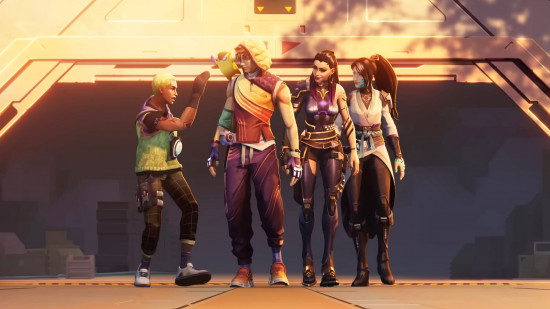
Miks is basically the ultimate wingman for his team — designed to have a meaningful impact beyond gunplay by empowering teammates to convert key moments into kills.
Riot Games Patch Notes 12.05
Waveform's map-targeter smoke deployment is a genuine quality-of-life upgrade over traditional smoke mechanics, and Bassquake as an ultimate is the kind of disruptive tool that can swing a round completely. A forward cone that simultaneously knocks back, deafens, and slows? In a game where information and positioning are everything, that's a nightmare to be caught in.
The one legitimate critique floating around the community — and it's a fair one — is that Miks's kit can feel like a bit of a mashup. The Harmonize Combat Stim echoes Brimstone's team utility philosophy. The M-Pulse's concuss mode draws comparisons to Breach. His smokes, while unique in deployment, are still smokes. Whether that makes him a versatile jack-of-all-trades or a Controller without a clean identity is something only weeks of meta play will determine.
The answer probably depends on your rank. In solo queue, Miks will struggle. Harmonize needs an engaged teammate to be effective, and healing via M-Pulse requires positional awareness your random duo may not have. In coordinated play — full stacks, tournament squads, serious ranked teams — he could be quietly broken.
Croatia's Got the Beat: Theme & Aesthetic
Riot hasn't just made Miks a music-themed agent in the superficial sense of "he has sound effects." The design philosophy here goes bone-deep. According to the dev team, they started by composing actual music, then extracted the most atmospheric elements from those tracks to build his ability sound effects. His M-Pulse device pulls inspiration from real-world synthesizers and sequencers. His suit features wave patterns. Festival wristbands. The whole kit.
Personality-wise, Miks is exactly what VALORANT's roster needed after a string of more serious, brooding agents. He beatboxes. He makes jokes mid-fight. He's the team DJ and the backbone simultaneously — there's a genuine charm to a character whose entire identity is built around making the people around him better. That tracks with his kit. This is an agent designed by people who actually thought about who he is, not just what he does.
The Highs and the Lows
✅ The Highs
- Only Controller with a healing ability — genuinely unprecedented
- Harmonize creates exciting snowball potential in coordinated teams
- M-Pulse dual-mode is one of VALORANT's most flexible designed abilities
- Bassquake ultimate offers genuine round-swinging crowd control
- Thematic coherence is some of Riot's best character work in years
- Arrival alongside meta nerfs to Yoru/Clove makes him instantly relevant
❌ The Lows
- Notably weaker in solo queue without teammate coordination
- Kit draws heavy comparisons to Brimstone and Breach — not fully original
- Identity risks feeling unfocused — support hybrid or Controller?
- Strong reliance on teammate positioning to maximize M-Pulse healing
- May underperform in lower-ranked lobbies with disorganized teams
Final Verdict: 8.5 / 10
Miks is one of the most ambitious Controller designs Riot has attempted in VALORANT — and it mostly pays off. The healing in a role that's never had it, the kill-refreshing stim, the dual-mode utility device: these aren't cosmetic quirks, they're genuine mechanical innovations that ask the player to think differently about what a Controller can do. He rewards players who communicate, coordinate, and actually care about their squad.
The concern is solo queue viability and the question of whether his hybrid identity will find a clean home in the meta. But given that his arrival coincides with nerfs to Yoru and Clove specifically to make room for a "team-first" agent, Riot clearly has a vision. And if any coordinated team builds around him properly, Miks might not just be a solid addition — he might be the most impactful new agent in years.
Set the tempo. Drop the smokes. Hit that bass.
| Category | Score |
|---|---|
| Kit Creativity | 9/10 |
| Team Utility | 9/10 |
| Solo Viability | 6/10 |
| Theme & Design | 9/10 |
| Meta Potential | 7.5/10 |
| Overall | 8.5/10 |