






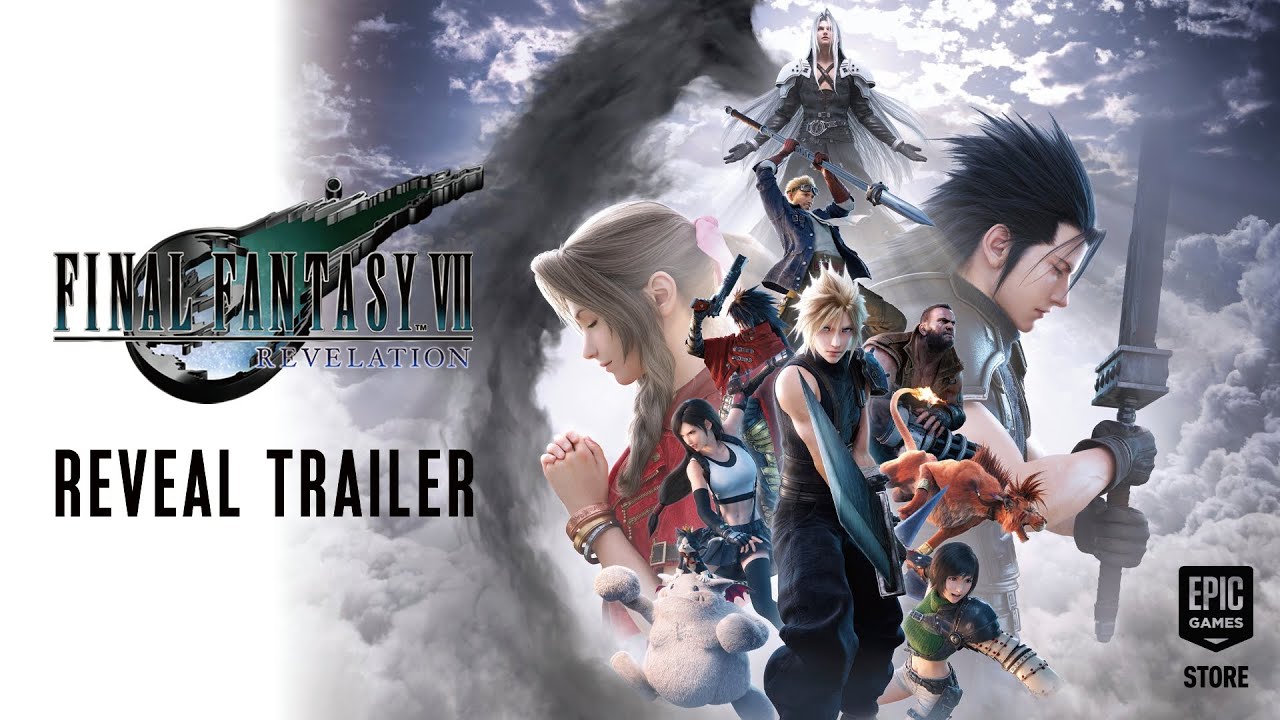
The wait is finally over. After years of speculation, leaks, and fan theories that could fill a library, Square Enix stepped onto the Summer Game Fest 2026 stage and dropped the announcement the Final Fantasy community has been holding its breath for. Final Fantasy VII Revelation is real, it has a name, it has a trailer, and it’s coming to every major platform simultaneously in Spring 2027.
This is the end. The trilogy that began with Final Fantasy VII Remake in 2020 and continued with the sprawling, stunning Rebirth in 2024 is getting its finale – and if what Square Enix has shown us is any indication, it intends to go out with everything it has.
What Is Final Fantasy VII Revelation?
Final Fantasy VII Revelation is the third and final entry in Square Enix’s ambitious reimagining of the original Final Fantasy VII. Directed once again by Naoki Hamaguchi, Revelation picks up directly from the events of Rebirth and will chart the final confrontation between Cloud, Aerith, Sephiroth, and the fate of the entire planet.
The name itself carries weight. “Revelation” positions this as something more than just Part 3 – it’s a statement of intent. The game isn’t simply wrapping up a plot; it’s promising answers to the questions the Remake trilogy has spent six years raising, including the timeline alterations, the Whispers, and what all of that divergence from the original story actually means for how this all ends.
Producer Yoshinori Kitase was brief but clear at the announcement: this is the culmination of thirty years of Final Fantasy VII storytelling. That’s not marketing language. That’s a promise.
Every Platform at Launch – A First for the Trilogy
Perhaps the most surprising aspect of the Revelation reveal isn’t the name or even the trailer. It’s the platform list.
Unlike Remake, which spent a year as a PlayStation exclusive before arriving on PC, and Rebirth, which followed a similar timed exclusivity arrangement, Revelation will release simultaneously on PS5, Xbox Series X|S, PC (Steam and Epic Games Store), and Nintendo Switch 2 on day one.
This is a genuine first for the trilogy. It signals either a shift in Square Enix’s business strategy, a change in the exclusivity arrangements that shaped the first two games, or both. For Xbox and Switch 2 players who have watched the first two chapters from the sidelines, this is the game they’ve been waiting to play as part of the launch audience rather than arriving years late.
It’s also an enormous vote of confidence in the Nintendo Switch 2’s capabilities – the idea that a game of Revelation’s apparent scale will run natively on Nintendo’s hybrid console is a statement about what that hardware can do.
The Highwind Changes Everything
One of the most exciting reveals in the announcement trailer is the return of the Highwind – the iconic airship from the original FFVII – and what it means for how the game is structured.
In Revelation, the Highwind is your primary means of traversal across an open-world map that spans the entirety of the planet Gaia. Players can fly anywhere on that map, drop into regions via parachute, and transition seamlessly from the air to the ground. Locations teased include returning regions from Rebirth alongside new areas that weren’t explorable in the previous games: Mideel, Rocket Town, Wutai, and even portions of Midgar itself.
This is a meaningful structural evolution. Rebirth was already ambitious in scope, featuring interconnected open regions, but Revelation appears to be moving toward something more holistic – a genuinely connected world where the urgency of the story (Meteor is falling, the planet is fighting back with its Weapons) is felt across every corner of the map.
The FITS System: Classic Final Fantasy Jobs Return
The new combat feature generating the most discussion is the FITS system – a mechanic that allows characters to equip special outfits that transform their fighting style entirely. These outfits are explicitly evocative of classic Final Fantasy job classes: Black Mage robes, warrior armour, and more.
It’s an elegant design choice. The Remake trilogy has always been built around the personality and visual identity of its characters, so changing their fighting style through thematically charged outfits rather than an abstract class selection screen feels true to that spirit. It also opens up the possibility of dramatically different playstyles within a single playthrough, which the existing ATB combat system already accommodates well.
What the Trailer Showed Us
The reveal trailer confirmed several things fans have been theorizing about since Rebirth’s cliffhanger:
- Meteor is actively descending. The planet is in crisis. The visual language of the trailer is grander and more apocalyptic than anything seen in the previous two games.
- The Weapons are back. The massive creatures that the Planet summons as a defense mechanism appear in force, suggesting they’ll play a major role in the story.
- Cloud and the full party return. The trailer featured glimpses of familiar faces from throughout the remake trilogy, including characters whose fates were left ambiguous after Rebirth.
- Matthew Mercer voices a character in the English dub, though the specific role hasn’t been confirmed.
Why This Matters Beyond Just One Game
It’s hard to overstate what this trilogy represents. The original Final Fantasy VII is widely credited with bringing JRPGs to a mainstream Western audience and remains one of the most culturally influential games ever made. The decision to remake it – not as a simple HD remaster, but as a full reimagining that deliberately altered its own story – was either the bravest or most reckless thing Square Enix could have done.
Six years on, with Remake and Rebirth both receiving critical acclaim, it looks like it’s working. Revelation has the extraordinary burden of closing a story that’s now operating on two levels simultaneously: it needs to satisfy fans of the original while paying off the new threads the Remake trilogy has spent two games weaving.
Conclusion
Final Fantasy VII Revelation is shaping up to be one of the most significant game releases in recent memory – not just as a conclusion to a beloved remake trilogy, but as a marker of how far game storytelling has come since 1997. With a simultaneous multiplatform launch, a planet-spanning open world, and nearly thirty years of franchise momentum behind it, Spring 2027 cannot arrive soon enough.
Frequently Asked Questions
What is Final Fantasy VII Revelation?
It’s the third and final game in Square Enix’s Final Fantasy VII Remake trilogy, concluding the story of Cloud, Aerith, Sephiroth, and the Planet. It releases Spring 2027.
What platforms is Final Fantasy VII Revelation coming to?
PS5, Xbox Series X|S, PC (Steam and Epic Games Store), and Nintendo Switch 2 – all simultaneously on launch day, a first for the trilogy.
What is the FITS system?
FITS is Revelation’s new combat mechanic, allowing characters to equip job class-themed outfits that grant entirely new movesets, evoking classic Final Fantasy archetypes like Black Mage and Warrior.
Will I need to have played Remake and Rebirth?
Yes. Revelation is the direct conclusion to a continuous narrative that began with Final Fantasy VII Remake (2020) and continued through Rebirth (2024).
When was Final Fantasy VII Revelation announced?
It was officially revealed at Summer Game Fest 2026 on June 5, 2026, with a full trailer and Spring 2027 release window.
What’s your reaction to the Final Fantasy VII Revelation reveal? Are you excited about the simultaneous multiplatform launch, or do you have concerns about how the trilogy will stick the landing? Drop your thoughts in the comments – we want to hear from the FF7 faithful.