










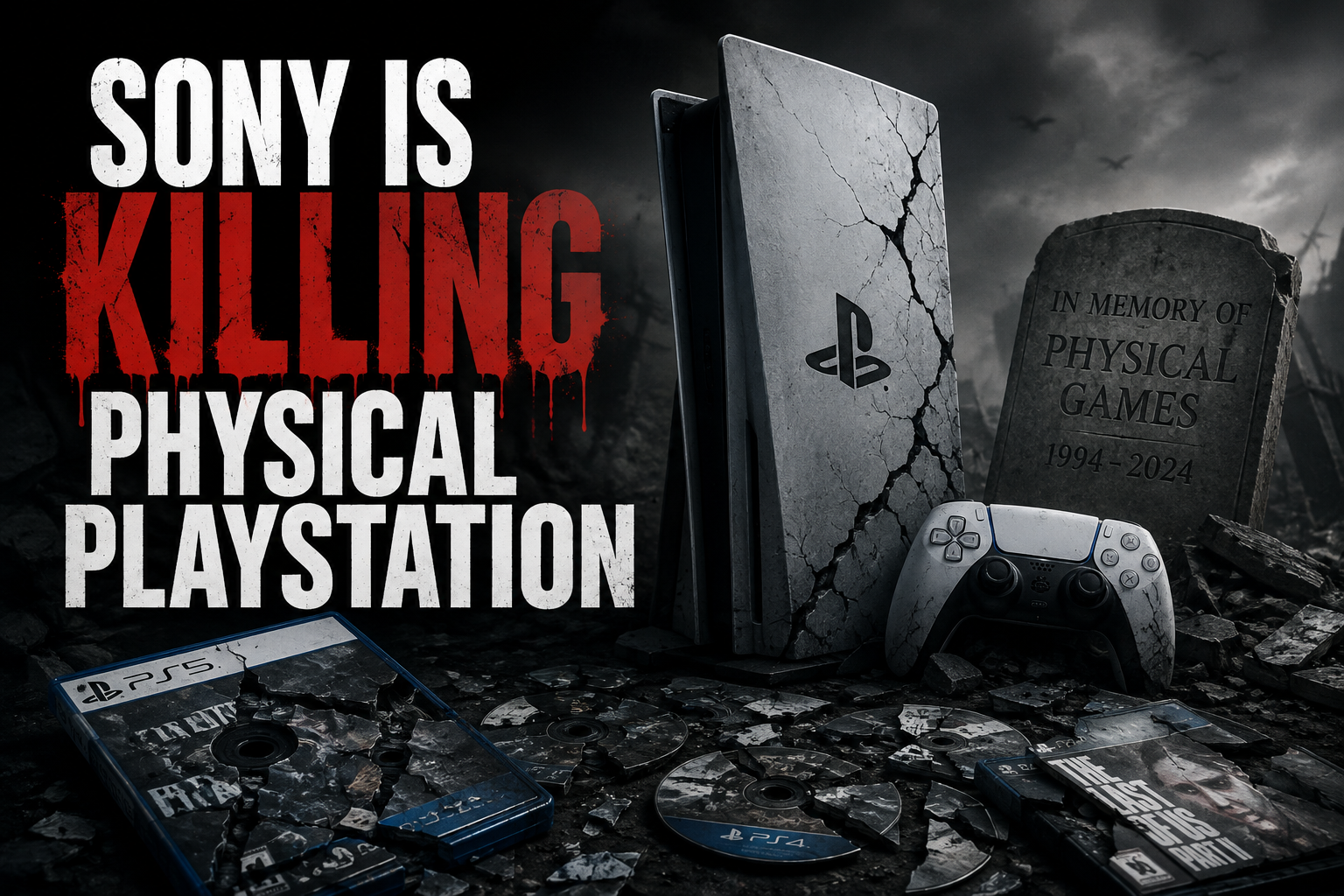
Sony confirmed this week that it will stop manufacturing physical discs for new PlayStation games starting in January 2028, pushing the platform toward an all-digital future. The announcement has triggered a swift backlash from players and retailers alike, with a "Don't Kill the Disc" petition on Change.org rocketing past 200,000 signatures in a matter of days.
What Sony Actually Announced
Sony says that beginning in 2028, all new first-party and third-party PlayStation games will be sold exclusively through the PlayStation Store or as code-in-box releases at retail, meaning the box will still exist on a shelf, but there will be no disc inside it. Sony has reportedly already begun repurposing its largest disc-printing factory in anticipation of the shift, signaling that the decision is not up for negotiation. Existing physical titles already on shelves are not affected, and older games already sold on disc will remain playable as normal.
Why Players Are Angry
The backlash centers on a handful of core concerns that show up again and again in the petition's comments and across social media. Chief among them is ownership: critics argue that a code-in-box is effectively a revocable license rather than a piece of property you actually own, and they point to Sony's past removal of purchased movies from customer accounts as evidence that digital "ownership" can vanish without warning. Preservation is another major worry, since physical media has historically been the most reliable way to keep older games playable once storefronts eventually shut down. The used-game market is also on the chopping block. Retailers like GameStop and the UK's Game have built entire business lines around buying, reselling, and trading in physical discs, and a fully digital catalog removes that option entirely. The backlash has since spread beyond angry comments into memes, "Not buying PS6" boycott threats, and a wave of PS Plus subscription cancellations.
How Retailers Are Responding
Game, a major UK retailer, released a blunt statement in response to the news, saying "our silence is over. Video game lovers, it is time to defend what matters to us." GameStop has stayed quieter publicly, and analysts note the chain may be better insulated than expected since software sales made up only about 18% of its most recent quarterly revenue, with collectibles, trade-ins, and hardware now carrying more of the business. Even so, the loss of new disc sales and trade-in inventory would still chip away at a core part of GameStop's identity.
Sony's shift to all-digital PlayStation games is still 18 months away, giving players time to stock up on physical copies of upcoming releases if that matters to them. Whether the backlash forces any kind of compromise, or simply fades the way some analysts predict, remains to be seen. For now, the "Don't Kill the Disc" petition keeps climbing, and the conversation around game ownership and preservation shows no sign of cooling off.
FAQ
When does Sony stop making physical PlayStation discs?
Sony says physical disc production for new PlayStation games will end in January 2028. Games already released on disc are not affected.
Will PS5 and PS6 still have disc drives?
Sony has not confirmed plans to remove disc drives from future hardware, but without new game discs being produced, an external drive would mainly be useful for older titles and movies.
Can I still buy games in a box after 2028?
Yes, but the box will contain a code to redeem the game digitally rather than an actual disc.
Why are retailers like GameStop upset about this?
Physical discs support the used-game market, which lets retailers buy, resell, and trade in copies. Digital purchases are tied permanently to one account and cannot be resold.
What is the "Don't Kill the Disc" petition?
It's a Change.org petition started by a Canadian retailer executive urging Sony to keep producing physical PlayStation discs. It has passed 200,000 signatures and topped Change.org's trending page.
Are other console makers doing the same thing?
Sony's announcement is specific to PlayStation. Other manufacturers have not announced identical plans as of this writing.